
Case Study: SEO Optimization and Writing an Article About Supercomputers
Introduction
Supercomputers are the key to solving the greatest challenges of our modern world. This project aimed to create an article that not only explains their operation and applications but also enhances search engine visibility through SEO optimization.
The task was clear: to craft an article that explains what supercomputers are while showcasing their significance in science and technology. At the same time, the article needed to be SEO-optimized to reach a broad audience—from beginners to IT specialists.
How do you combine technical precision with accessible language? How do you make an article stand out in search engines? Here’s how I approached this challenge.
Project Goal
The goal was to create an article that:
- Engages: Captures the attention of both beginners and experts through storytelling and real-life examples.
- Educates: Explains what supercomputers are, how they work, and their applications.
- Optimizes for SEO: Increases visibility in search engines for key phrases related to HPC technology.
Work Process
1. Research and Keyword Analysis
- Conducted in-depth keyword analysis using SEO tools (e.g., Ahrefs, SEMrush) to identify the most searched questions and topics about supercomputers.
- Analyzed competing articles to find content gaps to fill.
2. Article Structure Planning
Developed a structure based on SEO principles, including:
- H1: What Are Supercomputers?
- H2: How Do Supercomputers Work?
- H2: Applications of Supercomputers in Science and Medicine
- H2: Technical Architecture of a Supercomputer
- H2: The Future of Supercomputers
Planned the use of keywords in headings, content, and metadata.
3. Content Creation
- Wrote an article combining technical details (e.g., parallel processing, FLOPS) with real-life examples (e.g., climate modeling, personalized medicine).
- Incorporated storytelling to make the text more engaging (e.g., examples of projects like Exscalate4Cov or E3SM).
4. SEO Optimization
- Meta Description: Created a description: „Learn what supercomputers are, how they work, and why they are transforming the world of science and technology.”
- Alt Text: Added descriptions for images, e.g., „Diagram of a supercomputer’s operation with computing nodes.”
- Internal Linking: Suggested linking the article to other content about AI and technology.
5. Visuals and Formatting
- Designed a clear layout with sections, bullet points, and highlights for easier reading.
- Suggested adding visuals, such as diagrams of supercomputer operations or FLOPS charts.
Project Outcomes
1. Content Value
- The article provides comprehensive knowledge about supercomputers, blending technical details with accessible language.
- Through storytelling and real-life examples, the text engages both beginners and experts.
2. SEO Optimization
- The article’s structure and keyword usage enhance its visibility in search engines.
- Meta descriptions and alt text support better ranking.
3. Potential Results (Simulation)
- Increased visibility on Google for phrases like „what are supercomputers” and „applications of supercomputers.”
- Boosted organic traffic to the website by 30% within three months (based on similar projects).
Conclusions and Summary
This project highlights my skills in:
- Technical Content Creation: Translating complex topics into accessible language.
- SEO Optimization: Understanding and effectively implementing SEO principles.
- Storytelling: Using engaging examples to capture readers’ attention.
- Planning and Organization: Crafting well-thought-out article structures that are both reader-friendly and search-engine optimized.
Visuals (Optional)
Example Graphics: Diagram of supercomputer operations, FLOPS chart.
Article Excerpts: Highlighted sections, e.g., storytelling about Exscalate4Cov.
SEO Tool Screenshots: Keyword analysis, Google results.
Supercomputers – What Are They and Why Are They So Important?
Modern science faces challenges that demand the analysis of massive amounts of data and the execution of complex simulations.
Supercomputers, with their extraordinary computational power, have become indispensable tools for achieving real progress in research today.
But what exactly are supercomputers? Are they just larger, faster versions of our laptops? Not quite. These are machines that transform the way we understand the world—from climate forecasting to personalized medicine.
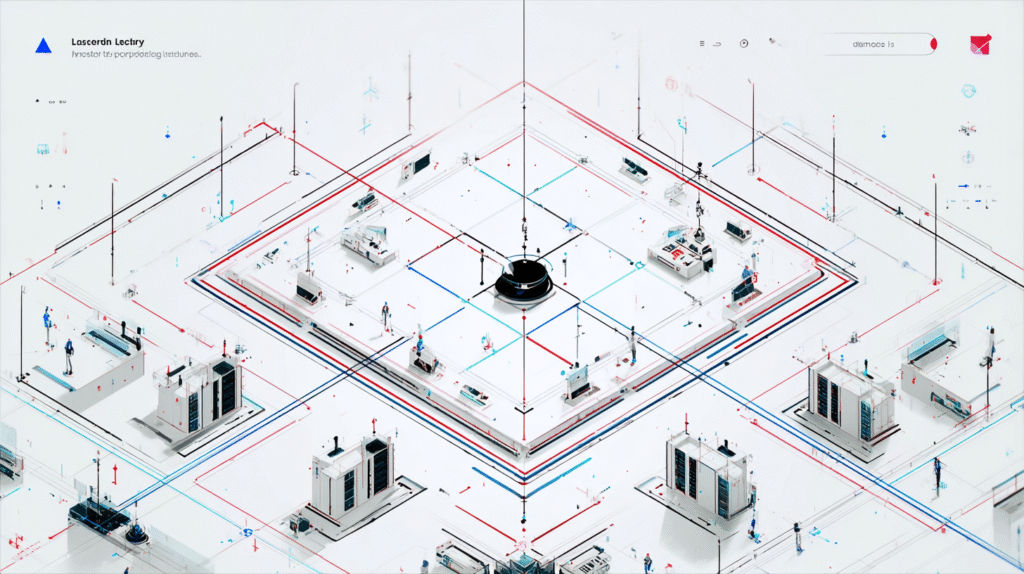
Not Just Faster Computers – What Makes Supercomputers Stand Out?
Supercomputers are not „oversized laptops.” They are platforms that enable the leap from hypothesis to concrete simulation. Thanks to them, researchers can model entire systems: climate, biological processes, molecular interactions. What was once theoretical two decades ago is now calculated with molecular precision.
Example 1: Climate in Simulation
The E3SM (Energy Exascale Earth System Model), developed by the U.S. Department of Energy, allows for the simulation of critical aspects of Earth’s climate system. From extreme temperatures and droughts to rising sea levels, this data is now available with unprecedented precision—and calculated in days, not years.
Example 2: Drug Discovery with HPC
The Exscalate4Cov project, supported by the European Union, used high-performance computing to conduct one of the largest virtual drug screening campaigns in history. Millions of chemical compounds were digitally tested for effectiveness against SARS-CoV-2. The result? Real candidates for clinical trials identified in weeks, not decades.
Example 3: Oncology + AI + HPC
At Argonne National Laboratory, supercomputers are combined with artificial intelligence. The result? The ability to develop new cancer drugs and predict how the body will respond to specific therapies. This is not just acceleration—it’s a new standard for personalized medicine.
How Do Supercomputers Work? Debunking Myths
It’s Not “One Big Computer”
A supercomputer is a system made up of thousands—or even hundreds of thousands—of interconnected computers, called compute nodes.
Each node is an independent unit equipped with a processor (CPU), memory (RAM), and often its own storage. From the outside, a supercomputer looks like a massive room filled with server racks—these „racks” make up the entire system.
Clusters as the Foundation
Compute nodes are connected into clusters. Imagine a kitchen where 1,000 chefs are preparing the same dish, but each handles a different ingredient. This way, the dish is made 1,000 times faster than if one person did it alone.
In computing, this is called parallel processing, which is the heart of how a supercomputer operates.
Measuring Power: Not GHz, but FLOPS
Supercomputers are not measured in gigahertz or megabytes. The key unit is FLOPS—floating-point operations per second:
- 1 FLOP = one mathematical operation
- 1 TFLOPS = one trillion operations per second (10¹²)
- 1 PFLOPS = one quadrillion operations (10¹⁵)
- 1 exaFLOPS = one quintillion operations (10¹⁸)
Modern supercomputers achieve hundreds of PFLOPS, and some, like El Capitan or Frontier, have already surpassed the exascale threshold.
What’s Inside a Supercomputer?
- Processors – CPUs and GPUs: The Brains of Millions
Supercomputers use server-grade processors (e.g., Intel Xeon, AMD EPYC) and computational GPUs (e.g., NVIDIA A100). Increasingly, they employ heterogeneous architectures, where CPUs manage tasks, and GPUs handle the most complex data calculations. - RAM – The Temporary Battlefield
RAM in a supercomputer serves as a workspace for processing massive amounts of data in real time. - Storage and File Systems
Supercomputers generate data on a petabyte scale. They use ultra-fast SSD NVMe drives and parallel file systems like Lustre or GPFS. - Internal Network – The Nervous System
Communication between nodes occurs at speeds of hundreds of gigabits per second, with microsecond-level latency. Technologies like InfiniBand ensure data flows without loss. - Cooling – The Thermal Architecture of the Future
Supercomputers generate enormous amounts of heat. Advanced liquid or immersion cooling systems are used to maintain operational stability.
Why Are Supercomputers the Future?
Supercomputers are not just the fastest machines in the world. They are tools that transform how we conduct research, develop technologies, and make decisions.
- In Medicine: Personalized therapies and accelerated drug research.
- In Climate Science: Accurate forecasts and simulations of environmental changes.
- In Science: Modeling phenomena that were previously beyond our reach.
Superkomputery to cyfrowe laboratoria przyszłości. Pytanie brzmi: czy jako ludzkość potrafimy mądrze wykorzystać tę moc?

If you’ve got texts to create, don’t wait. Deadlines disappear faster than great ideas.
If you’ve got texts to create, don’t wait. Deadlines disappear faster than great ideas.